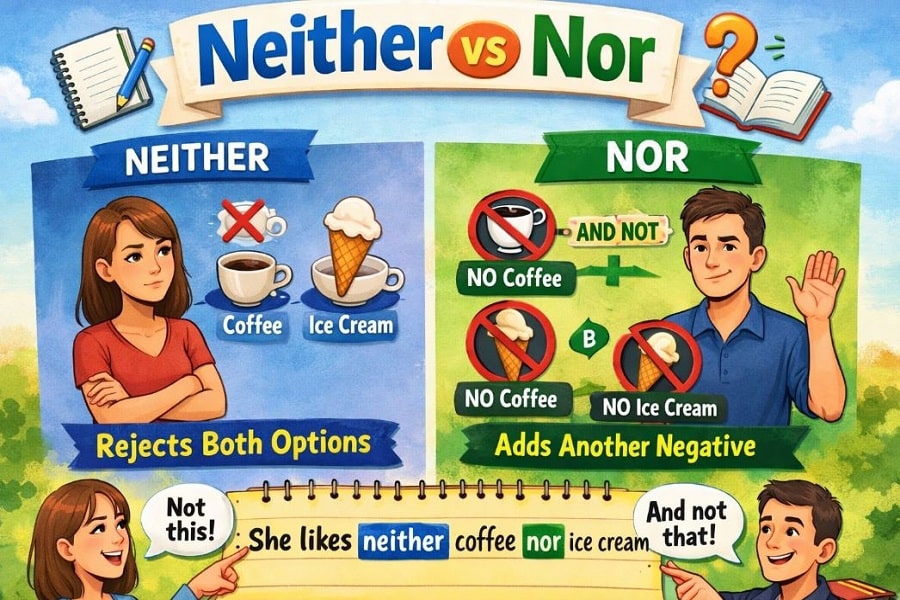
Neither vs Nor | Meaning, Differences, Rules, and Examples

Neither or Nor

Understanding the difference between neither vs nor is one of the most common English grammar challenges in English. Many learners struggle to use them correctly in sentences, especially when forming negative statements. The good news? Once you understand the meaning, rules, and structure, using neither and nor becomes easy and natural. Let’s break everything down … Read more

Neither VS None | What’s the Difference? Rules, And Examples

Neither VS None

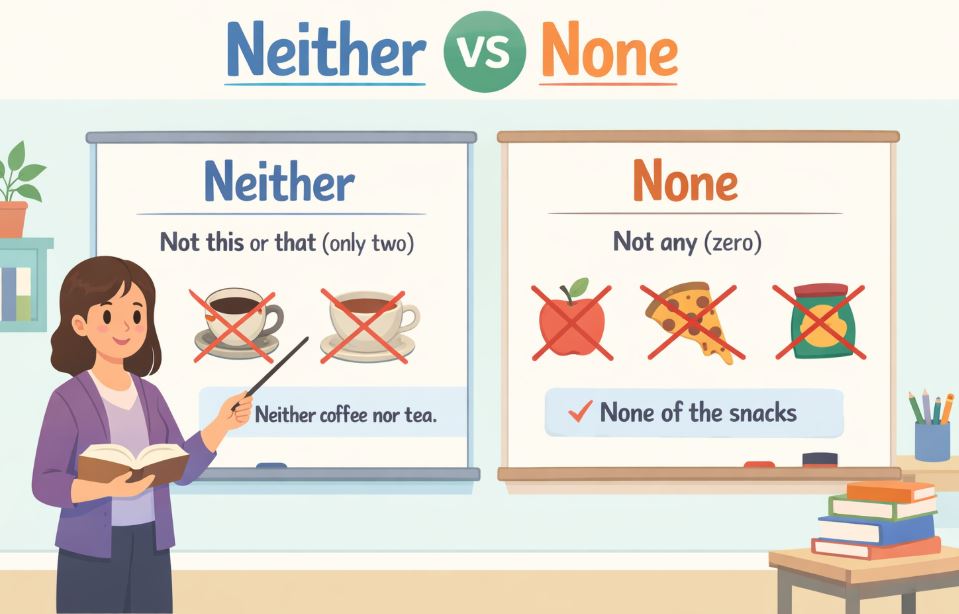
Understanding the difference between ‘neither’ and ‘none’ is one of the most common challenges in English grammar. Many learners confuse these two words because both are used to describe situations with no choices or negative outcomes. However, their meanings, grammar rules, and usage are not the same. By the end of this article, you’ll confidently … Read more

How to Apply for a Teaching Certificate? A Step-by-Step Guide

How to Apply For a Teaching Certificate?

Obtaining a teaching certificate is a significant milestone for individuals seeking to become professional educators. Whether you plan to teach in a public school, a private institution, or an online learning platform, this certification proves that you have the skills and training needed to teach confidently in a classroom. This easy-to-read guide explains everything you … Read more

Someone vs Anyone | Grammar Rules, Differences & Examples

Someone VS Anyone

Understanding when to use “someone” and “anyone” can be tricky, even for fluent English speakers. Someone VS Anyone with their differences, examples, uses and more has given here. These two words look similar but have different meanings and uses in grammar. This guide will help you clearly understand the difference between “someone” and “anyone”, with … Read more

Anybody VS Anyone | Meaning, Grammar, and Correct Usage

Anybody VS Anyone

Many English learners — and even native speakers — often get confused about when to use “anybody” and “anyone.” At first, both seem identical since they refer to any person, but there are slight differences in tone, formality, and usage that matter in everyday communication. Both words are indefinite pronouns, meaning they don’t refer to … Read more