Will Be vs Would Be | Complete Guide with Examples, And Chart

Will be VS Would be

English learners often get confused between “will be” and “would be.” At first glance, they look similar — but their meanings and uses are very different. Will be = expresses a certain fact, plan, or promise about the future. Would be = expresses hypothetical or conditional ideas, politeness, or the past form of “will.” Quick … Read more

Have Been or Had Been Quizzes | A Complete Guide for Learners

Have been or Had been quiz

English learners often get confused between “have been” and “had been.” Both are forms of the verb to be, but they are used in different contexts and tenses. Understanding the difference can improve your English Grammar, fluency, and writing clarity. In this guide, we’ll explain: What “have been” means and how to use it What … Read more

Did VS Have | Differences, Uses, Examples, and Structure details

Did VS Have

Many English learners struggle with the difference between did and have, and it’s easy to see why. Both words appear often in everyday conversations, English grammar exercises, and English proficiency exams. They may look simple, but their uses are quite different—and mixing them up can quickly lead to confusion or incorrect sentences. Understanding did and … Read more

Do VS Make | The Complete Guide (Rules, Examples, Exercises)

Do VS Make

Learning English can be tricky, especially when it comes to verbs that seem similar but serve different purposes. One of the most common confusions is Do VS Make. Both verbs are used to describe actions, yet they follow distinct rules, and combine with specific collocations that can change their meaning entirely. In simple terms, use … Read more

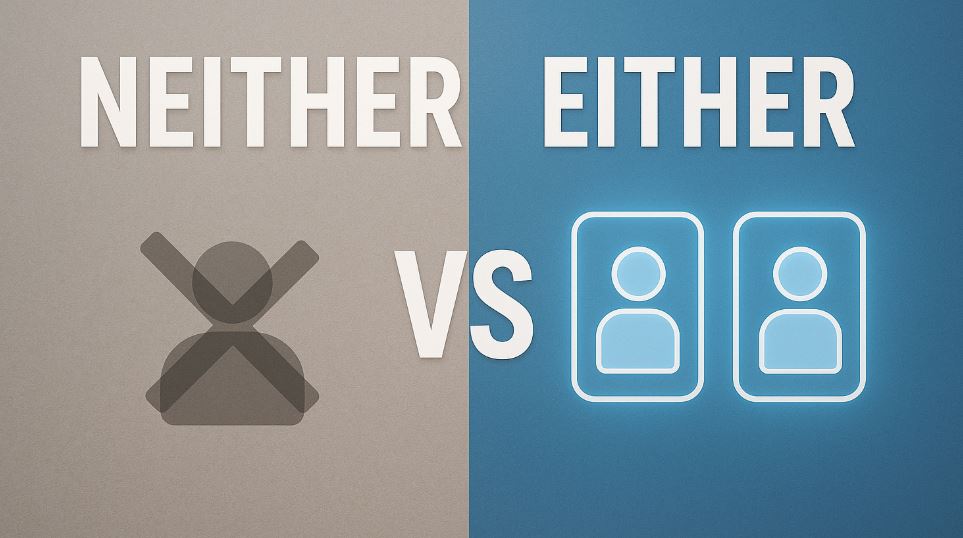
Neither VS Either | Complete Guide for English Learners

Neither VS Either

English learners often face challenges when encountering words that look or sound similar but have completely different meanings and uses. Two such commonly confusing words are “neither” and “either.” Although they might seem interchangeable at first, each serves a distinct purpose in English grammar. “Neither” is used to indicate that none of the two options … Read more

12 Ways to Use Would in English

12 ways to use Would in English

Learning how to use “would” is an important step in mastering English communication. This small but powerful word appears in many situations — from polite requests to imaginary conversations about the past or future. Understanding its uses helps you sound more natural, respectful, and fluent in everyday speech. For example, we say “I would like … Read more

Do VS Did | Definition, Rules, Examples, & Key Differences

Do VS Did

English learners often get stuck when deciding whether to use “do” or “did.” At first glance, they may look similar, but their usage depends heavily on tense and subject agreement. This confusion is very common because both words function as auxiliary verbs—the backbone of forming questions, negatives, and emphatic statements in English. Understanding the definition … Read more