
Choosing a career in teaching is a meaningful decision. But before stepping into a classroom as a licensed teacher, you need the right education — and one of the most common questions people ask is: How many years is a teaching degree?
The answer depends on the type of program you choose, your location, and how quickly you wish to complete it. Most teaching degrees require 3 to 4 years, but accelerated and alternative routes may be completed in less time.
This guide breaks down every pathway in simple, easy-to-read language so you can clearly understand your options.
How Many Years Is a Teaching Degree?
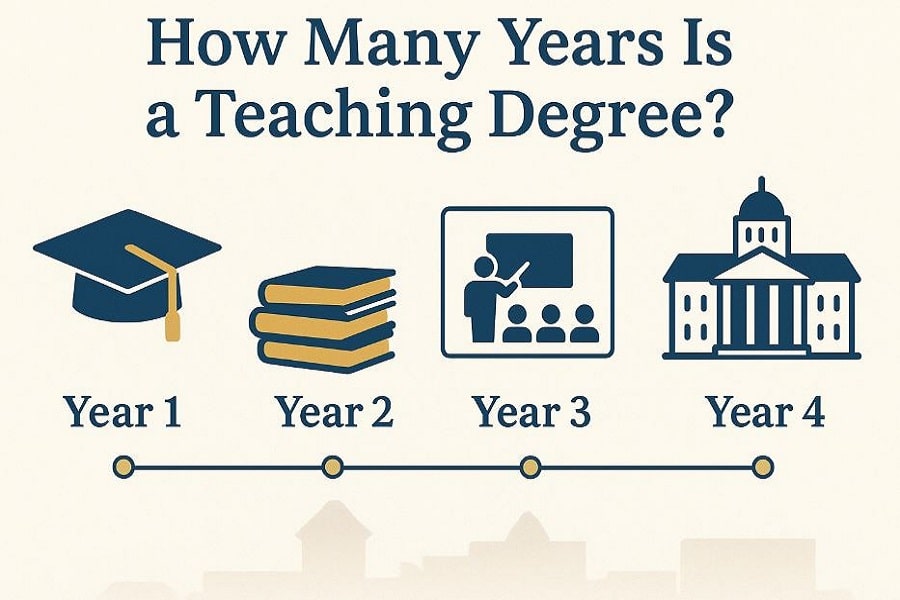
In most countries, a teaching degree typically takes 4 years to complete when studied full-time. This is usually a Bachelor of Education (B.Ed.) or a Bachelor’s degree + teacher preparation program.
Common Duration Options
- 4 years – Standard bachelor’s degree in education
- 3 years – Some countries offer a shorter teaching degree
- 1–2 years – Master’s degree in teaching
- 6–12 months – Alternative or accelerated certificate programs
The time you spend depends on your education level, major, and whether your program includes student teaching or internships.
Is Teaching a 3-Year Degree?
In several countries — such as the UK and Australia — teaching can be completed in 3 years. These programs focus heavily on education courses and teaching practice.
However, in countries like the US or Canada, a 3-year degree is not enough for full teaching certification. Students may need:
- Extra coursework
- A teaching license
- A one-year graduate diploma
So yes, a teaching degree can be 3 years, but it often requires additional steps depending on local regulations.
How Fast Can You Get a Teaching Degree?
If you want to become a teacher quickly, there are accelerated options.
Fastest ways to complete a teaching degree:
- Accelerated B.Ed. (2 years)
Offered by some universities for high-performing students. - One-year teaching certification
For people who already have a bachelor’s degree in another field. - Alternative certification (6–12 months)
Allows you to teach while completing coursework.
These routes save time but are usually intense and require strong commitment.
Is There a 2-Year Bachelor’s Degree?
A true 2-year bachelor’s degree does NOT exist in most countries.
What does exist:
- 2-year associate degrees
- Diploma programs
- Transfer degrees
These can shorten your teaching timeline because you can transfer into a 4-year bachelor’s program and finish sooner.
However, to become a licensed teacher, you generally need a full 4-year degree.
How Many Years of College to Be an Elementary Teacher?
To become an elementary teacher, you usually need:
- A 4-year bachelor’s degree
- A teaching license or certification
Some states require a 5-year combined bachelor’s + master’s program.
Your education includes:
- Child development courses
- Classroom management
- Teaching methods
- Student teaching (12–16 weeks)
So overall, you can expect 4–5 years before becoming a fully licensed elementary teacher.
How Long Does It Take to Get a Teaching Certificate?
A teaching certificate is separate from your degree.
It can take:
6 months to 2 years, depending on:
- Certification exams
- State requirements
- Student teaching hours
- Whether you choose traditional certification
People who already hold a bachelor’s degree in another subject can often get certified.
FAQs About Teaching Degree Duration
Does the length of a teaching degree vary by country?
Yes. Some countries offer a 3-year teaching degree, while others require a 4-year bachelor’s program plus additional certification steps. Always check your local teaching regulations to know the exact requirements.
Can I finish my teaching degree faster if I study online?
Online programs may help you move at a flexible or accelerated pace, but you will still need to complete required student teaching hours in person. The total duration may shorten, but it depends on your school and country.
Can I become a teacher without getting a full bachelor’s degree?
In most countries, no. A bachelor’s degree is required for full licensure. However, some places allow you to start teaching with a temporary license if you join an alternative certification program.
Is a teaching degree shorter for those who already hold a college degree?
Yes. If you already have a bachelor’s degree, you can enter a 1-year postgraduate teaching program or a 6–12 month alternative certificate, making the process much faster.
Can work experience reduce the time needed to become a teacher?
In some regions, relevant work experience may allow you to skip certain courses or qualify for fast-track certification, reducing the overall time needed to start teaching.
Are accelerated teaching programs harder than regular programs?
Accelerated programs are usually more intensive because they condense coursework into a shorter period. They are ideal for motivated students or career changers willing to handle a fast-paced schedule.
How long does it take to switch teaching levels, like from elementary to high school?
Switching levels is often quicker than completing a full degree. You may only need:
- Additional subject-specific courses
- A new license endorsement
This can take a few months to one year, depending on requirements.
Do private schools require the same length of education as public schools?
Not always. Many private schools are more flexible and may hire teachers with less traditional pathways, such as alternative certificates. Public schools usually follow stricter licensing rules.
Last Word
Choosing the right path to become a teacher is a personal journey, and the time it takes can vary based on your goals, your country, and the type of program you choose. Whether you follow a traditional 4-year degree, complete a 3-year program abroad, or take a fast-track certification route, every option leads you one step closer to a rewarding career in education.
What matters most is finding a pathway that matches your pace, your passion, and your future plans. Teaching isn’t just a profession — it’s a chance to inspire, guide, and make a difference in the lives of students every single day. With the right preparation and dedication, you can confidently step into the classroom and start shaping the next generation.