
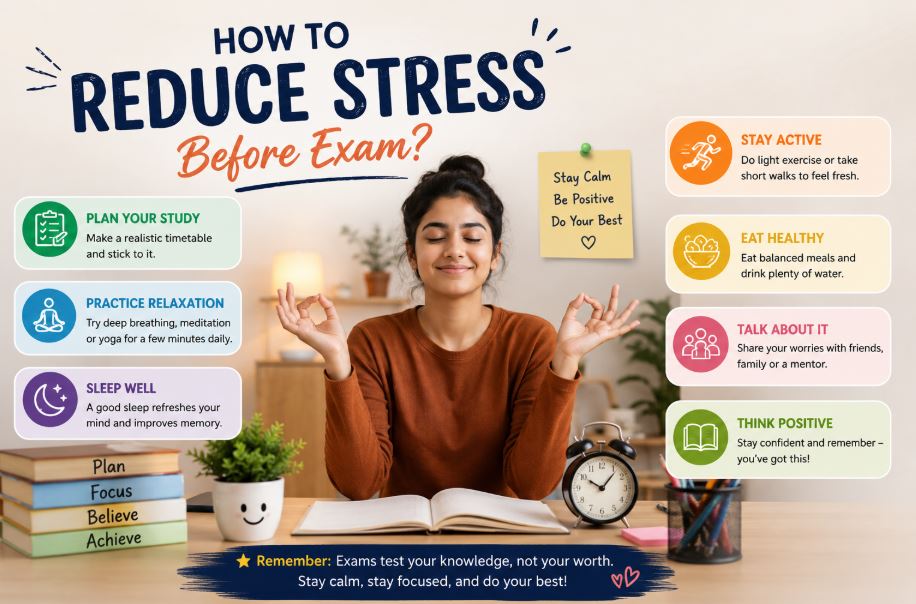
Exam season is one of the most stressful periods in any student’s life. The pressure of performing well, the fear of failure, and the mountain of material to review can make even the most confident learner feel overwhelmed. But here’s the truth: a certain level of stress is normal — and even helpful. The key is learning how to reduce stress before an exam so it works for you, not against you.
In this guide, you’ll discover proven, science-backed strategies on how to manage exam stress, reduce anxiety during tests, and walk into any exam room feeling focused, prepared, and in control.
Why Do Students Experience Exam Stress?
Before diving into solutions, it helps to understand the root causes. Exam stress typically arises from:
- Fear of failure or not meeting personal/parental expectations
- Poor time management and last-minute cramming
- Lack of sleep and unhealthy lifestyle habits during study at home.
- Negative self-talk and comparison with peers
- Uncertainty about what will appear on the exam
Understanding why you feel stressed is the first step toward managing it effectively. Once you identify the trigger, you can apply the right strategy.
How to Reduce Stress Before a Test? Start with Smart Preparation
One of the most powerful ways to reduce stress before a test is simply being well-prepared. Anxiety often peaks when students feel underprepared. Here’s how solid preparation can eliminate unnecessary stress:
1. Create a Realistic Study Schedule
Avoid cramming everything into the night before. Instead, spread your study sessions over days or weeks. Break your syllabus into manageable chunks and assign specific topics to each study session.
Pro Tip: If you have limited time, check out this detailed guide on How to Prepare for Exams in One Week — it offers a structured day-by-day plan that maximizes efficiency without burning you out.
2. Use Active Recall and Spaced Repetition
Passive reading rarely sticks. Instead, test yourself using flashcards, practice questions, or the Feynman Technique (explaining concepts in simple terms). Spaced repetition — reviewing material at increasing intervals — dramatically improves memory retention and reduces last-minute panic.
3. Prioritize High-Weight Topics
Not all exam content carries equal weight. Focus on chapters or topics that appear most frequently in past papers or carry the most marks. This strategic approach reduces the study load while boosting confidence.
How to Manage Exam Stress? Lifestyle Strategies That Actually Work
Managing exam stress isn’t just about studying smarter — it’s about taking care of your mind and body throughout the process.
4. Get Enough Sleep Every Night
Sleep deprivation is one of the biggest contributors to exam anxiety. When you’re sleep-deprived, your ability to concentrate, recall information, and regulate emotions decreases significantly.
Recommendation: Aim for 7–9 hours of sleep each night, especially in the week leading up to your exam. Avoid all-nighters — they do more harm than good.
5. Exercise Regularly to Release Tension
Physical activity is one of the most underrated stress-busters available to students. Even a 20–30 minute walk, jog, or yoga session can lower cortisol levels (the stress hormone) and boost endorphins — your body’s natural mood lifters.
Regular exercise also improves concentration and mental clarity, which means your study sessions will be more productive too.
6. Eat Brain-Boosting Foods
What you eat directly affects how your brain performs under pressure. During exam preparation:
- Eat regularly — don’t skip meals, especially breakfast
- Choose complex carbohydrates like oats, brown rice, and whole grain bread for sustained energy
- Include omega-3 rich foods like salmon, walnuts, and flaxseeds for cognitive function
- Stay hydrated — dehydration impairs focus and increases feelings of anxiety
- Limit caffeine and sugar — they cause energy spikes followed by crashes that worsen anxiety.
7. Practice Mindfulness and Deep Breathing
Mindfulness is the practice of being fully present in the moment without judgment. Even five minutes of mindful breathing before a study session — or right before an exam — can dramatically lower anxiety levels.
Try the 4-7-8 Breathing Technique:
- Inhale through your nose for 4 counts
- Hold your breath for 7 counts
- Exhale slowly through your mouth for 8 counts
- Repeat 3–4 times
This technique activates the parasympathetic nervous system, which counteracts the “fight-or-flight” stress response.
Read also more related topics: Is teaching a stressful Job?
How to Reduce Stress and Anxiety During Exams: In-the-Moment Techniques
Knowing how to reduce stress and anxiety during exams is just as important as pre-exam preparation. Here’s what to do when anxiety strikes mid-test:
8. Arrive Early and Settle In
Rushing into an exam at the last minute spikes your cortisol levels unnecessarily. Aim to arrive 10–15 minutes early. Use that time to find your seat, take a few deep breaths, and mentally shift into “exam mode.”
9. Read the Entire Paper First
When the exam begins, resist the urge to jump straight into answering. Take 2–3 minutes to read through the entire paper. This gives you a clear overview, helps you identify easier questions to tackle first, and prevents unpleasant surprises mid-exam.
10. Start with Questions You Know Best
Beginning with questions you feel confident about serves two purposes: it builds momentum and ensures you secure those marks even if time becomes tight later. This simple strategy has a profound psychological effect — it shifts your mindset from anxious to capable.
11. Reframe Negative Thoughts in Real Time
If your mind starts spiraling with thoughts like “I can’t do this” or “I’m going to fail,” pause and consciously reframe them:
- “I can’t do this” → “I’ve prepared for this and I’ll do my best”
- “I’m going to blank out” → “I know this material — I just need to breathe and focus”
- “Everyone else seems smarter” → “Everyone handles exams differently — this is my journey”
Cognitive reframing is a well-established technique from Cognitive Behavioral Therapy (CBT) and is highly effective for managing in-exam anxiety.
12. Manage Your Time During the Exam
Poor time management during an exam is a major source of in-the-moment panic. Before starting, quickly allocate time to each section based on marks. Keep an eye on the clock, and if you get stuck on a question, move on and come back to it later.
How to Prepare Mentally Before the Exam: The Night Before
The 12–24 hours before an exam are critical. Here’s how to spend them wisely:
13. Do a Light Review — Not a Full Cram Session
The night before is not the time to learn new material. Instead, do a light review of your notes, key formulas, or concept maps. Your goal is to reinforce what you already know, not absorb new information.
14. Prepare Everything in Advance
Lay out your exam essentials the night before: ID card, stationery, water bottle, and any permitted materials. Knowing you’re logistically prepared removes one layer of morning anxiety.
15. Avoid Stressful Conversations Before Bed
Well-meaning friends or family might unknowingly increase your anxiety by asking “Are you ready?” or discussing difficult topics. Set gentle boundaries the night before your exam — protect your mental calm.
16. Use Visualization
Spend 5 minutes before sleep visualizing a successful exam experience. Picture yourself walking in calmly, reading the paper with ease, and writing confidently. Research in sports psychology shows that mental rehearsal improves actual performance — and it works for exams too.
Long-Term Strategies to Manage Exam Stress Throughout the Academic Year
If exam stress is a recurring issue, consider building habits that address it year-round:
17. Build Consistent Study Habits
Students who study consistently throughout the year experience significantly less pre-exam anxiety than those who rely on last-minute cramming. Aim for 1–2 hours of focused study each day rather than marathon sessions before tests.
18. Seek Support When Needed
It’s perfectly normal — and brave — to ask for help. Talk to a trusted friend, family member, teacher, or school counselor if exam stress is affecting your mental health. Many educational institutions also offer student support services and workshops on stress management.
19. Learn from Past Exams
After each exam, review your performance — not to dwell on mistakes, but to identify patterns. Are you consistently running out of time? Struggling with specific question types? Facing anxiety that causes mental blanks? Recognizing patterns allows you to address them before the next exam cycle.
20. Practice Self-Compassion
Your worth as a person is not determined by your exam results. Perfectionism is one of the biggest drivers of exam anxiety. Give yourself permission to do your best — not someone else’s best. Self-compassion has been shown in psychological research to actually improve performance by reducing fear of failure.
Quick Stress-Relief Techniques at a Glance
Here’s a handy summary of fast-acting strategies you can use any time stress spikes:
| Situation | Quick Fix |
|---|---|
| Night before exam | 4-7-8 breathing + light review + early sleep |
| Morning of exam | Healthy breakfast + arrive early + avoid cramming |
| Right before entering the hall | Box breathing + positive affirmations |
| During the exam (feeling blank) | Pause, breathe, skip and return later |
| After a tough exam | Self-compassion + avoid over-analyzing |
Final Thoughts: You Can Beat Exam Stress
Learning how to reduce stress before an exam is a skill — and like all skills, it improves with practice. The strategies outlined in this guide address stress from every angle: preparation, lifestyle, mindset, and in-the-moment techniques.
Remember, the goal isn’t to eliminate all stress. A small amount of pressure keeps you alert and motivated. The goal is to keep that stress at a manageable level so it sharpens your focus rather than clouding it.
Start applying even two or three of these strategies before your next exam, and you’ll notice a meaningful difference. Be consistent, be kind to yourself, and trust the work you’ve put in.