
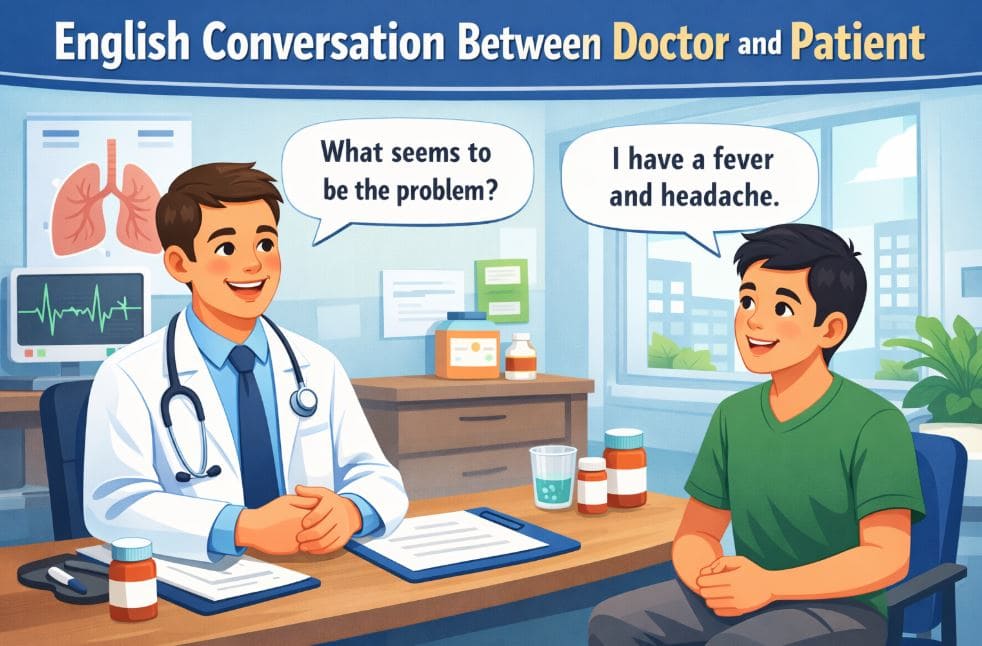
Learning English conversation between doctor and patient is very important for students. It is especially useful for those in Class 8 and Class 10. It also helps beginners who want to improve their spoken English in real-life situations.
You may need this skill for exams or daily communication. In both cases, understanding medical conversations helps you speak clearly and confidently.
This guide includes simple sentences and dialogues, useful vocabulary, and well-structured conversations. It also offers practice exercises to help you improve your English fluency in healthcare situations.
What is a Doctor and Patient Conversation?
A doctor and patient conversation is a structured dialogue where a patient explains their health problem and a doctor provides diagnosis and treatment.
Key Features:
- Clear communication
- Polite and respectful tone
- Simple and understandable language
- Focus on symptoms, diagnosis, and advice
Effective communication helps avoid misunderstandings and ensures proper treatment.
Common Vocabulary Used in Doctor-Patient Conversations
To improve your fluency, you must learn basic medical vocabulary.
Common Words:
- Symptoms – signs of illness (fever, pain, cough)
- Diagnosis – identifying the disease
- Prescription – medicines suggested by the doctor
- Treatment – process of curing illness
- Check-up – medical examination
Useful Phrases:
- “What seems to be the problem?”
- “I have been feeling unwell.”
- “Do you have a fever?”
- “Take this medicine twice a day.”
Read and know also: English Conversation Between Teacher and Student
Basic Structure of Doctor and Patient Dialogue
A well-structured conversation usually follows four steps:
1. Greeting
Doctor: Good morning. How can I help you?
2. Problem Discussion
Patient: I have a headache and fever.
3. Diagnosis & Advice
Doctor: It seems like a viral infection. Take rest and medicine.
4. Closing
Patient: Thank you, doctor.
Short Dialogue Between Doctor and Patient About Fever
This example is simple and ideal for beginners.
Doctor: Good morning. What brings you here today?
Patient: Good morning, doctor. I have a fever.
Doctor: How long have you had it?
Patient: Since yesterday.
Doctor: Do you have a cough or cold?
Patient: Yes, a slight cough.
Doctor: You may have a viral infection. Take these medicines and drink plenty of water.
Patient: Thank you, doctor.
Short Conversation Between Doctor and Patient About Headache
Doctor: Hello. What is your problem?
Patient: I have a severe headache.
Doctor: How long have you been experiencing it?
Patient: For two days.
Doctor: Are you getting enough sleep?
Patient: Not really.
Doctor: Lack of sleep may be causing it. Take rest and avoid screen time.
Patient: I understand. Thank you.
Doctor and Patient Dialogue for Class 8
This version uses simple vocabulary and short sentences.
Doctor: What is your problem?
Patient: I have a stomachache.
Doctor: Did you eat outside food?
Patient: Yes, yesterday.
Doctor: That may be the cause. Take this medicine and avoid junk food.
Patient: Thank you, doctor.
Tip for Class 8 Students: Focus on clarity and basic sentence structure.
Doctor and Patient Dialogue for Class 10
This dialogue is slightly more advanced and suitable for exams.
Doctor: Good afternoon. What seems to be the issue?
Patient: Good afternoon, doctor. I have been suffering from a high fever and body pain for three days.
Doctor: Have you taken any medication?
Patient: Yes, but it did not help much.
Doctor: Let me check your temperature. It appears to be a viral infection.
Patient: What should I do?
Doctor: Take these prescribed medicines, stay hydrated, and get adequate rest.
Patient: Thank you very much, doctor.
Tip for Class 10 Students: Use complete sentences and proper grammar.
Long English Conversation Between Doctor and Patient
Doctor: Good morning. Please sit down. What brings you here today?
Patient: Good morning, doctor. I have been feeling weak and dizzy for the past few days.
Doctor: Do you have any other symptoms?
Patient: Yes, I also have a mild fever and headache.
Doctor: Are you eating properly?
Patient: Not really. I have lost my appetite.
Doctor: It seems like you are suffering from a viral infection and weakness.
Patient: Is it serious?
Doctor: No, but you need proper care.
Patient: What should I do?
Doctor: Take these medicines, eat nutritious food, and drink plenty of fluids.
Patient: Thank you for your advice.
Doctor: You are welcome. Take care.
Common Questions Doctors Ask Patients
Doctors often ask simple and direct questions:
- What brings you here today?
- How long have you had this problem?
- Are you taking any medication?
- Do you have any allergies?
Common Responses from Patients
Patients should answer clearly:
- I have had a fever for two days.
- I feel pain in my chest.
- I am not sleeping well.
- I feel tired all the time.
Tips to Improve English Conversation in Medical Situations
Practice Regularly
Speak with friends or classmates.
Learn Common Phrases
Memorize useful expressions used in hospitals.
Use Role-Play
Act as a doctor and patient for practice.
Watch Real Conversations
Learn from videos and real-life examples.
Mistakes to Avoid in Doctor-Patient Conversations
- Using incorrect vocabulary
- Speaking in long, confusing sentences
- Not explaining symptoms clearly
- Forgetting polite expressions
Practice Exercises for Students
Fill in the Blanks:
Doctor: What ______ the problem?
Patient: I ______ a fever.
Role Play:
- Student A: Doctor
- Student B: Patient with headache
Speaking Practice Topics:
- Fever
- Cold and cough
- Stomach pain
Conclusion
Mastering English conversation between doctor and patient is an important skill for students and beginners. It helps you build confidence and improve your communication skills. It also prepares you for real-life situations.
You can improve step by step. Practice the dialogues regularly. Learn useful vocabulary. Avoid common mistakes.
With consistent practice, you will speak English more fluently and effectively in medical situations.