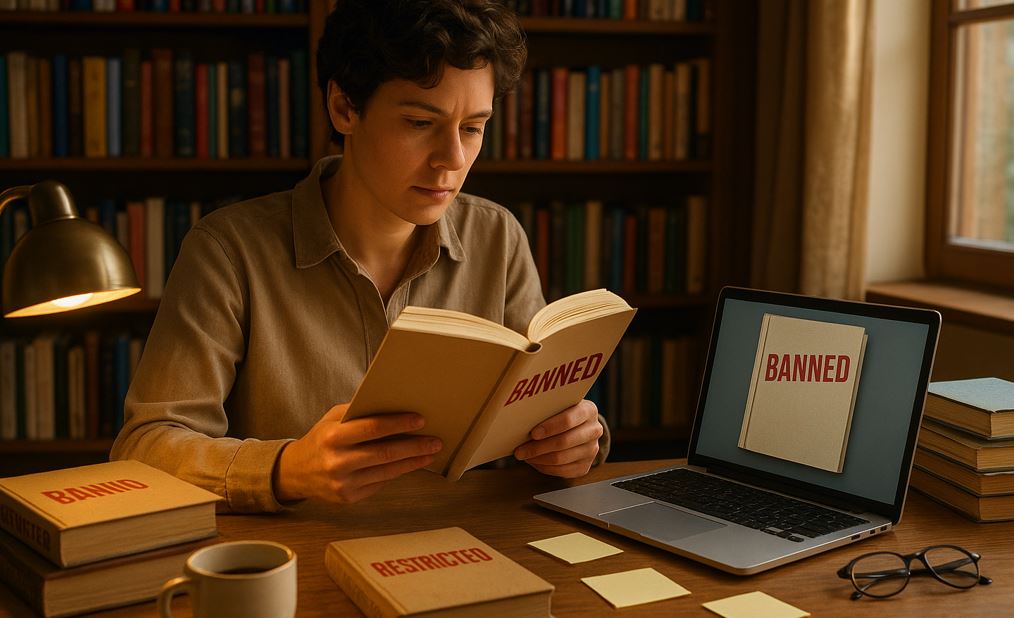
Every year, debates flare up around “banned books.” Some people worry they might get in trouble for reading them. Others wonder whether banned books are truly banned at all. So let’s answer the big question: Is it illegal to read banned books?
In most cases—no, it’s not illegal. But the full story depends on where you live, who banned the book, and why. This guide breaks everything down clearly and simply.
What Does “Banned” Actually Mean?
Many readers assume a “banned book” is a book the government makes illegal to read.
That’s rarely true.
Here’s what “banned” usually means:
A school removed it from classrooms.
A library restricted access.
A parent group filed a challenge.
A board or institution temporarily removed it pending review.
So are banned books really banned?
Not in the way most people imagine. They’re usually restricted in institutions—not outlawed for private reading.
Is It Illegal to Read Banned Books?
The Short Answer: In most democratic countries, reading a banned book is not illegal. You cannot be arrested or fined for reading one at home, online, or through a bookstore.
Why Are Books Banned?
Books are usually restricted because of:
Sexual content
LGBTQ+ themes
Violence
Political beliefs
Religion
“Age-inappropriate” topics
Schools and libraries often face pressure to remove certain books for these reasons. But again—this almost never affects your personal right to read them.
Is It Illegal to Read Banned Books in the U.S.?
No.
In the United States, book bans typically happen in school districts or public libraries, not through federal law.
Key points:
Your First Amendment rights protect your ability to read what you choose.
Book bans in the U.S. remove books from institutions, not from your personal life.
You can still buy, borrow, or download nearly all banned titles legally.
So the keyword answers itself: Is it illegal to read banned books in the US?
→ No, it is fully legal.
Is It Illegal to Read Banned Books in Europe?
Europe has different laws depending on the country, but reading banned books is generally not illegal.
Common trends:
The EU strongly supports freedom of expression.
Some nations have restrictions on extreme political content, but these typically target distribution—not private reading.
Most “book bans” in Europe come from schools or libraries, not criminal law.
Thus, Is it illegal to read banned books in Europe?
→ Almost always no.
Countries Where Reading Certain Books Can Be Illegal
While most countries allow free reading, some governments strictly control information.
In certain places, reading banned books may be illegal if they involve:
Anti-government political ideas
Religious texts not approved by the state
LGBTQ+ themes
Books critical of national leaders
Certain historical accounts
These laws vary widely and are typically found in authoritarian regimes.
The Most Banned Books in the World
Here are some of the most banned or heavily restricted books globally (for various reasons):
1984 by George Orwell
The Satanic Verses by Salman Rushdie
The Diary of Anne Frank
Fahrenheit 451 by Ray Bradbury
Lolita by Vladimir Nabokov
Animal Farm by George Orwell
Certain religious texts
Reasons include politics, sexuality, religion, and perceived “moral” concerns.
Why People Still Seek Out Banned Books?
People read banned books because they:
Promote critical thinking
Explore challenging ideas
Reflect real human experiences
Help readers understand cultures, politics, and history
Often, banning a book only makes people more curious about it.
How to Legally Access Banned Books?
Even if a school or library bans a book, you can still legally access it through:
Independent bookstores
Online retailers
Digital archives
Free-speech organizations
University libraries
eBook platforms
In most countries, it is 100% legal to read banned literature privately.
Are Banned Books Dangerous? Myths vs Facts
Myth: Banned books are harmful or illegal.
Fact: Most are banned due to controversy, not danger.
Myth: You can get in trouble for reading them.
Fact: In free countries, no one can punish you for your private reading choices.
Read also more related topics: Why Is Teaching Important to You?
Basic Skills for Constructive Communication
Are High School Teachers Allowed to Swear?
Final Verdict: Is It Illegal to Read Banned Books?
No—reading banned books is not illegal in the U.S., Europe, or most of the world.
Most bans apply only to schools and libraries, not individuals. Free-speech principles protect your right to read privately in nearly all democratic nations.
FAQ
Why do books get banned?
Usually due to concerns about content, politics, or age suitability.
Can I get in trouble for reading a banned book online?
Not in most countries. The restrictions usually apply to institutions, not personal reading.
Which country bans the most books?
Countries with strict censorship laws typically ban the most titles, often for political or religious reasons