
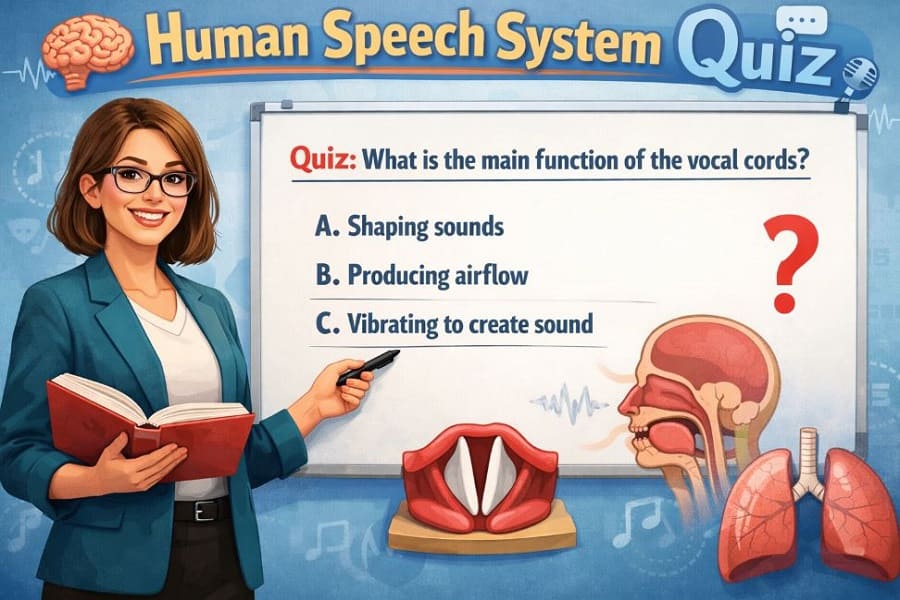
The human speech system is a fascinating biological and linguistic mechanism that allows us to communicate through sounds, words, and sentences. It involves several organs working together—like the lungs, and articulators—to produce meaningful speech. Understanding how this system works is essential for students of linguistics, speech therapy, and language learning.
This Human Speech System Quiz is designed to help you test and improve your understanding in a fun and engaging way. Whether you’re a beginner or revising key concepts, these questions will challenge your knowledge and reinforce learning.
Human Speech System Quiz test
Read and practice also more related quizzes: Contractions Pronunciation Quiz
Human Speech System Quiz (MCQs)
1. Which organ supplies the air required for speech?
A. the tongue
B. the lungs
C. the lips
2. What is the main function of the vocal cords?
A. shaping sounds
B. producing airflow
C. vibrating to create sound
3. Which structure shapes sound into speech?
A. the vocal tract
B. the diaphragm
C. the chest
4. The mouth and nose cavities are part of:
A. the digestive system
B. the vocal tract
C. the circulatory system
5. Sounds produced without blocking airflow are called:
A. consonants
B. vowels
C. syllables
6. Which articulator is most important for shaping speech sounds?
A. teeth
B. jaw
C. tongue
7. Sounds made by blocking airflow are known as:
A. vowels
B. consonants
C. tones
8. What role does the diaphragm play in speech?
A. controlling airflow
B. shaping sound
C. vibrating
9. Which cavity produces nasal sounds like “m” and “n”?
A. oral cavity
B. nasal cavity
C. chest cavity
10. What is the smallest unit of sound in speech?
A. phoneme
B. word
C. sentence
Answers of these Quizzes
1. B. the lungs
2. C. vibrating to create sound
3. A. the vocal tract
4. B. the vocal tract
5. B. vowels
6. C. tongue
7. B. consonants
8. A. controlling airflow
9. B. nasal cavity
10. A. phoneme
FAQs About Human Speech System Quiz
What is the human speech system?
The human speech system is a group of organs and structures that work together to produce speech sounds, including the lungs, vocal cords, and articulators like the tongue and lips.
Why is learning about the speech system important?
It helps in understanding language development, improving pronunciation, and supporting fields like linguistics and speech therapy.
What are the main components of the speech system?
The main components include the respiratory system (lungs), phonatory system (vocal cords), and articulatory system (tongue, lips, teeth).
What is the difference between vowels and consonants?
Vowels are produced without blocking airflow, while consonants involve some level of obstruction in the vocal tract.
Who can take this quiz?
Anyone interested in language, students, teachers, or individuals preparing for exams related to linguistics or communication skills.
Conclusion
The Human Speech System Quiz is a simple yet effective way to evaluate your understanding of how speech is produced. You not only test your knowledge but also deepen your grasp of the essential components of human communication.
Keep exploring and learning—mastery of the speech system can significantly enhance both spoken and written language skills.