
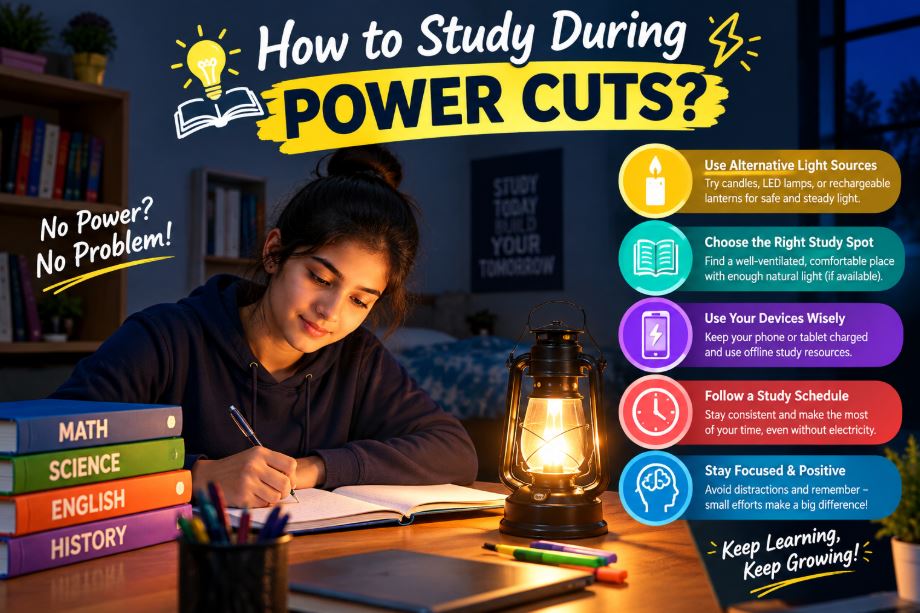
Power cuts have a way of arriving at the worst possible moment — right when you have opened your books, right before an exam, or right in the middle of an important chapter. For students in areas that deal with frequent load shedding, this isn’t a rare inconvenience. It’s a regular part of the study routine.
The good news is that a power cut doesn’t have to mean a wasted study session. With the right lighting, the right planning, and a few focus-boosting habits, you can keep your study schedule on track no matter how unpredictable the electricity supply is. This guide covers everything you need to know about how to study during power cuts, how to study during load shedding specifically, and how to focus 100% while studying — even without electricity.
Why Power Cuts Disrupt Studying So Much
Before jumping into solutions, it helps to understand why a power cut feels so disruptive in the first place. It isn’t just about the lack of light.
1. Loss of lighting
Reading and writing become physically harder in dim or dark conditions.
2. Broken concentration
The sudden silence of fans, devices, and appliances shifts attention away from studying.
3. Device dependency
Many students rely on laptops, tablets, or online resources that stop working once batteries drain.
4. Heat and discomfort
Without fans or air conditioning, especially in warmer climates, it becomes harder to sit still and focus.
5. Disrupted routine
An unplanned break in study time often turns into a longer, unintended break.
Once you know what’s actually working against you, it becomes much easier to plan around it.
How to Study During Power Cuts: Practical Tips
Here are the most effective, tried-and-tested ways to keep studying productively when the lights go out.
1. Invest in Reliable Alternative Lighting
Lighting is the first problem to solve. A few options work far better than a single candle.
- Rechargeable LED study lamps: Charge them during the day so they’re ready whenever the power goes.
- Solar-powered lights: A one-time investment that keeps working for years, especially useful for daily load shedding.
- Battery-operated lanterns: Provide wider, softer light coverage compared to a single lamp.
- Avoid candles where possible: They flicker, strain the eyes faster, and carry a fire risk around paper and books.
2. Charge Your Devices in Advance
If you know the load shedding schedule for your area, charge everything before the cut begins.
- Keep laptops, tablets, and phones fully charged ahead of scheduled outages.
- Use a power bank dedicated only to study-related devices.
- Download any notes, PDFs, or e-books in advance so you’re not relying on the internet.
- Switch devices to battery-saving or low-brightness mode to stretch usage time.
3. Plan Study Sessions Around the Power Schedule
If your area has a predictable load shedding routine, use it to your advantage instead of fighting it.
- Schedule heavy, screen-based work (research, typing, video lectures) for hours when power is available.
- Save reading, revision, and handwritten practice for the hours without electricity.
- Keep a printed or handwritten backup of important notes for outage hours.
4. Set Up a Dedicated ‘Power-Cut Study Kit’
Having everything in one place removes the scramble the moment the lights go out.
- A rechargeable lamp or lantern.
- A fully charged power bank.
- Printed notes, textbooks, or a notebook for handwritten practice.
- A physical clock or watch, since phone screens dim to save battery.
- A hand fan or small battery-operated fan for hot climates.
5. Choose the Right Study Spot
Location matters more during a power cut than most students realize.
- Sit near a window during the day to use natural light for as long as possible.
- Move to a cooler, well-ventilated room if the heat becomes distracting.
- Avoid lying down to study by lamp or candlelight — it strains the eyes faster and encourages sleep.
How to Study During Load Shedding: Country and Routine-Specific Tips
Load shedding differs from an occasional power cut because it usually follows a fixed schedule. That predictability is actually an advantage once you plan around it.
- Get the exact schedule: Check your local utility provider’s app, website, or notice board for accurate load shedding timings.
- Build a rotating study plan: Assign subjects to “power hours” and “no-power hours” so nothing depends entirely on electricity.
- Batch your internet-dependent tasks: Do research, streaming lectures, or online quizzes only during power hours.
- Prepare the night before: Charge devices and lamps overnight so the next day’s outages don’t catch you unprepared.
- Use offline tools: Offline dictionaries, downloaded lecture notes, and printed practice papers remove your dependence on Wi-Fi during cuts.
Once load shedding becomes part of your weekly rhythm instead of a surprise, it stops feeling like a disruption.
Common Mistakes to Avoid During Power Cuts
- Waiting until the power goes out to look for a lamp or candle.
- Relying only on a phone flashlight, which drains the battery you need for other tasks.
- Skipping study sessions entirely just because the internet is down.
- Studying in poor lighting for long periods, which leads to headaches and eye strain.
- Not having any printed or offline backup of important material.
How to Focus 100% While Studying (With or Without Power)
A power cut removes distractions like notifications and streaming — but only if you use that quiet time well. These focus techniques work whether the lights are on or off.
1. Use the Pomodoro Technique
Study in short, focused bursts rather than long, unstructured stretches.
- Study for 25 minutes, then take a 5-minute break.
- After four rounds, take a longer 15–20 minute break.
- A wind-up timer or watch works well when your phone is saving battery.
2. Remove Distractions Before You Start
- Keep your phone in another room or on airplane mode.
- Tell family members you need uninterrupted time.
- Keep your study space clear of anything unrelated to the current task.
3. Set a Clear Goal for Each Session
Vague plans lead to distracted studying. Specific plans lead to focus.
- Instead of “study chemistry,” aim for “finish the chemical bonding chapter and solve 10 practice questions.”
- Write the goal down before you start so you have something to check against.
4. Use Active Recall and Handwriting
Power cuts are actually a great excuse to move away from screens and back to handwritten practice, which research consistently links to better memory retention.
- Summarize what you just read in your own words, without looking at the book.
- Test yourself with flashcards or self-made quiz questions.
- Teach the concept out loud as if explaining it to someone else.
5. Stay Hydrated and Keep Moving
- Keep a bottle of water nearby, especially during hot outages.
- Take a short walk or stretch during breaks to stay alert.
- Avoid heavy meals right before a study session, since they tend to bring on drowsiness.
Read also more related topics: How to Study Without Motivation?
How to Prepare for Exams in One Week?
Study Tips for Weak Students at Home
How to Use AI Tools for Studying?
Frequently Asked Questions
Is it bad to study with candlelight?
Candlelight is better than nothing, but it flickers and produces uneven light, which tires the eyes faster than a steady lamp.
A rechargeable LED lamp or lantern is a safer and more comfortable option for longer study sessions.
How can I study without internet during a power cut?
Keep downloaded notes, e-books, and lecture PDFs saved on your device in advance. Printed textbooks, handwritten notes, and offline practice papers are also reliable options that don’t depend on either electricity or a connection.
What is the best light for studying during a power outage?
A rechargeable LED study lamp with adjustable brightness is generally the best choice. Solar-powered lights are a strong long-term option for areas with frequent or daily load shedding.
How do I stay motivated to study when the power keeps going out?
Treat power-cut hours as a fixed part of your schedule rather than an interruption. Assign specific tasks — like reading, revision, or handwritten practice — to those hours so you always know exactly what to do when the lights go off.
Can I use my phone as the main source of light while studying?
It’s better to avoid this. A phone flashlight drains battery you may need later for checking notes or contacting someone in an emergency. A dedicated lamp or lantern is a more practical choice.
How long before load shedding should I prepare?
Ideally, charge your devices, lamps, and power banks the night before or first thing in the morning, so you’re never caught off guard when the scheduled cut begins.
Does studying without electricity actually improve focus?
Many students find that it does, simply because there are fewer digital distractions like notifications, videos, or social media. The key is preparing properly with lighting and offline materials so the lack of power doesn’t become its own distraction.
Final Thoughts
Power cuts and load shedding are frustrating, but they don’t have to derail your study routine. With a dedicated study kit, a schedule that works around outages instead of against them, and a few proven focus techniques, you can turn even the darkest study session into a productive one.
Plan ahead, stay consistent, and the next power cut will feel like nothing more than a normal part of your routine.