
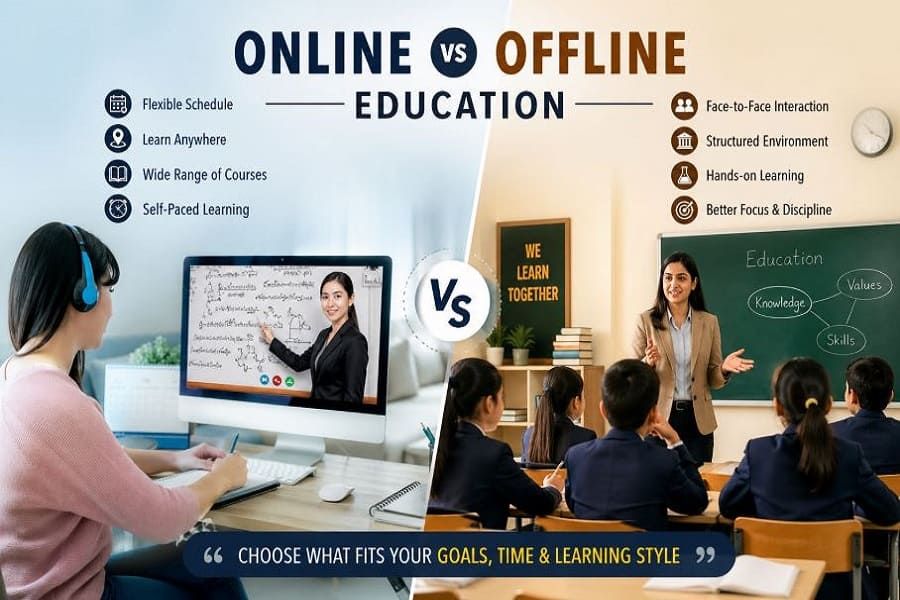
Education has changed a lot in recent years. Today, learners can choose between online learning and traditional classroom education. This has created a common question: online vs offline education—which one is better?
Some people prefer online learning because it is flexible and convenient. Others choose offline education because it offers structure and face-to-face interaction. To make the right choice, you need to understand both options clearly.
In this guide, you will learn the difference between online education vs offline education, their pros and cons, and even how to learn new skills online for free.
What is Online Education?
Online education is a way of learning through the internet. Students use devices like smartphones, laptops, or tablets to access lessons.
There are different types of online learning:
- Live classes with teachers
- Recorded video lessons
- Self-paced courses
One major benefit is flexibility. You can learn anytime and from anywhere. You can also repeat lessons if needed.
Online learning also gives access to many courses. You can study almost any subject without leaving your home. However, it requires focus and self-discipline to succeed.
What is Offline Education?
Offline education is the traditional way of learning in schools, colleges, or universities. Students attend classes in person and interact directly with teachers.
This method creates a structured learning environment. It helps students stay focused and follow a routine.
Face-to-face interaction is a big advantage. Students can ask questions instantly and take part in group activities. Offline education also offers hands-on training, which is important for many subjects.
However, it is less flexible and often more expensive.
Difference Between Online Education vs Offline Education
Here is a simple comparison to understand the difference between online education vs offline education:
Learning Environment
Online education happens on digital platforms. Offline education takes place in physical classrooms.
Flexibility
Online learning allows you to study anytime. Offline learning follows a fixed schedule.
Cost
Online courses are usually cheaper or even free. Offline education often includes extra costs like travel and accommodation.
Interaction
Offline education provides direct interaction. Online learning may have limited communication.
Accessibility
Online education is available anywhere with internet access. Offline education requires physical presence.
Practical Learning
Offline learning is better for hands-on practice. Online learning may lack real-life experience in some cases.
Read also: education vs Intelligence
Online vs Offline Education: Advantages and Disadvantages
Advantages of Online Education
There are many benefits of online learning. Online learning is popular because of its many benefits:
- Learn anytime and anywhere
- Lower cost or free courses
- Wide range of subjects
- Learn at your own pace
- Great for working professionals
Disadvantages of Online Education
Online learning also has some drawbacks:
- Less face-to-face interaction
- Needs strong self-discipline
- Depends on internet connection
- Limited practical experience
Advantages of Offline Education
Offline education still plays an important role:
- Direct interaction with teachers
- Better focus and discipline
- Hands-on learning opportunities
- Improves social skills
Disadvantages of Offline Education
However, it also has some limitations:
- Higher costs
- Fixed schedule
- Less flexibility
- Time needed for travel
Which is the Best: Online vs Offline Education?
Many people ask, which is the best: online vs offline education? The answer depends on your needs.
Choose online education if you:
- Want flexibility
- Are working or busy
- Prefer learning at your own pace
Choose offline education if you:
- Need structure and guidance
- Learn better with direct interaction
- Require practical training
In many cases, a mix of both works best. This is called hybrid learning.
How to Learn New Skills Online for Free
You can easily learn new skills online without spending money. Many platforms offer free courses in different fields.
Simple Steps to Start
- Set a clear goal
- Choose a trusted platform
- Follow a daily routine
- Practice regularly
- Track your progress
Why Free Online Learning is Helpful
- No cost involved
- Learn from experts worldwide
- Improve career skills
- Study anytime
With consistency, you can build valuable skills from home.
Online vs Offline Education for Different Learners
School Students
Offline learning builds a strong foundation. Online tools can help with extra practice.
College Students
Both methods together improve flexibility and understanding.
Job Seekers
Online courses help learn new skills quickly.
Working Professionals
Online learning is ideal due to time flexibility.
Lifelong Learners
Both options work depending on personal goals.
Future of Education: Online, Offline, or Hybrid?
Education is moving toward a blended model. This combines online and offline learning.
Technology like virtual classrooms and AI is improving online education. At the same time, offline learning remains important for real-life experience.
In the future, hybrid learning will likely become the most common approach.
Conclusion
The debate on online vs offline education shows that both methods have their strengths.
Online learning offers flexibility and affordability. Offline education provides structure and interaction.
The best choice depends on your goals and learning style. By understanding the advantages and disadvantages of online vs offline education, you can choose the right path for your success.
FAQs
What is the main difference between online and offline education?
Online education is digital, while offline education happens in physical classrooms.
Is online education better than offline education?
It depends on your needs. Online is flexible, while offline offers direct interaction.
What are the advantages and disadvantages of online learning?
It is flexible and affordable but requires discipline and may lack interaction.
Can I learn skills online for free?
Yes, many platforms provide free courses in different subjects.
Which is more effective for students: online or offline education?
Both are effective. A mix of both often gives the best results.